
By The Saltwater Insider Crew
Winterizing is not a chore you do to the boat. It is a bet you are making about February.
Water expands when it freezes. That is the entire problem, and it does not care how new your engine is or how mild the forecast looked in November. A block, a manifold, a heat exchanger, a raw water pump, a head, a water heater — every one of them is a place where a cup of trapped water becomes a four-figure spring surprise.
Here is the work, in the order that makes sense.
Fuel first
Fill the tank. A full tank leaves less room for the air that carries the moisture that becomes condensation on the inside of your tank walls all winter.
Add fuel stabilizer at the manufacturer’s ratio, then run the engine long enough to pull treated fuel all the way through the system. Stabilizer sitting in the tank while untreated fuel sits in the lines and carburetor or injectors accomplishes very little.
Change the fuel filter and the water-separating filter. Doing it now means you are not draining a season’s worth of moisture into your fuel system in April.
Engine
Change the oil and the filter while the engine is warm. Used oil holds acids and combustion byproducts, and leaving that sitting against internal surfaces for five months is exactly the wrong idea.
Change the lower unit or outdrive gear oil, and look at what comes out. Milky, grey or foamy oil means water intrusion and a seal problem — and that is a problem you want to know about in November, not on opening day.
Flush the cooling system and get antifreeze through every raw water passage. On an outboard, run fresh water through it and let it drain fully in the vertical position. On inboards and sterndrives, work through the manufacturer’s procedure for draining or filling with the correct antifreeze concentration — every engine is different and the drain points are not obvious.
Fog the cylinders per the manufacturer’s instruction. Grease the fittings. Replace or inspect the water pump impeller.
Every other water system aboard
This is where the expensive misses happen, because people winterize the engine and forget that a boat is full of plumbing.
Fresh water tank and lines. Water heater — drain it and bypass it. Head and holding tank. Washdown pumps, raw water washdown, livewell, baitwell, macerator, air conditioning raw water circuit, ice maker, shower sump, bilge pump lines.
Pump non-toxic antifreeze rated for potable systems through each one until it runs pink from the outlet. Every outlet. The one you forget is the one that cracks.
Batteries
Take them off the boat if you can, or at minimum disconnect them. Clean the terminals. Store them somewhere they will not freeze, on a maintainer rather than a trickle charger left permanently on.
A battery that goes into winter partially discharged is far more vulnerable to freeze damage than a fully charged one.
Water out, air moving
Pull the drain plug and leave it out. Tape it somewhere you will find it, because launching without it is a rite of passage nobody enjoys.
Open lockers, lift cushions, prop up hatches. Trapped still air plus a temperature swing equals condensation equals mildew. Moisture absorbers help. Airflow helps more.
Cover it properly
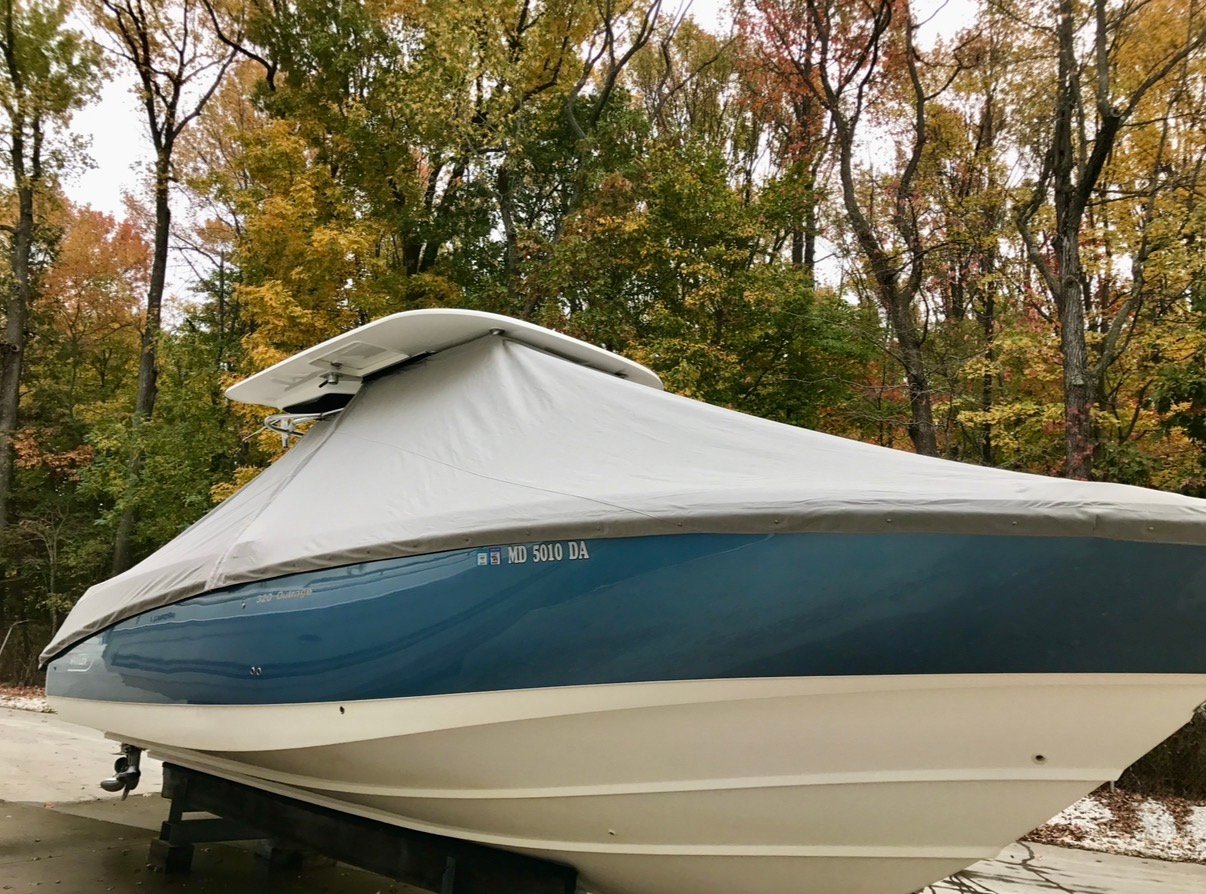
A cover that holds water is worse than no cover. Whatever you use — shrink wrap, canvas, a frame — build in enough pitch that water and snow shed rather than pool, and enough ventilation that the boat can breathe.
Shrink wrapping a damp boat with no vents is how you open it in spring to a science experiment.
Two things worth knowing
Check your policy language on freeze damage. Freeze and ice damage is commonly excluded from boat policies unless specific conditions are met — some insurers offer an endorsement that provides coverage if the boat is winterized by a marine professional. Read what yours actually says before you decide to do the work yourself.
Write down what you did. A one-page record of what was changed, what was flushed, what was filled and on what date is worth real money later, both to a future buyer and to you in April when you cannot remember whether you fogged it.
The honest summary
Nobody has ever regretted over-winterizing a boat. Plenty of owners have opened the cover in spring and found out exactly which system they forgot.
If you are not certain about a procedure on your specific engine, that is not a reason to guess. It is a reason to have the yard do it, or at minimum to have the manual open in front of you.
This article is general guidance and not a substitute for your engine and equipment manufacturers’ winterization procedures, which vary significantly by make and model. Use only antifreeze rated for the system you are treating, follow all product safety instructions, and dispose of used oil and antifreeze at an approved facility. If you are unsure, have a qualified marine technician perform the work.
See you on the water.