
By The Saltwater Insider Crew
Nobody buys a boat because they are excited about bottom paint. But nothing else on your boat quietly costs you more speed, more fuel and more money than getting this decision wrong. Growth does not care that you had a busy month. It attaches every single day the boat sits in the water.
Here is how to think it through like a Captain instead of like a guy standing in an aisle reading the back of a can.
Two families, not fifty
Strip away the marketing and there are two basic categories.
Hard paint cures into a firm film that stays put. The biocide leaches out through the surface while the paint itself stays where you put it. That toughness is the whole point — it holds up to scrubbing, to trailer bunks, to a diver hitting it every month, and to running hard. Fast boats, race boats, trailered boats and any hull that gets cleaned on a schedule are hard paint candidates.
The catch is buildup. Hard paint does not wear away, so it accumulates season after season until eventually somebody is stripping years of coating off your hull, and that is not a cheap afternoon.
Ablative paint is designed to wear. As the boat moves, the surface sloughs off and exposes fresh biocide underneath. Nothing accumulates, and the antifouling stays effective as long as there is film left to wear through. The more coats you put on, the longer the interval before you are back in the yard.
Ablatives come in several flavors — controlled solubility copolymer, self-polishing copolymer, and hybrid. Self-polishing releases biocide through a chemical process rather than pure physical wear, which means it keeps working at anchor and not just underway. Hybrids can be burnished smooth for speed while still self-polishing, which makes them a real option for a boat that runs hard but also sits.
The trade-off with ablatives is simple: they are not the paint for a hull that gets aggressively scrubbed. Scrub too hard or with the wrong pad and you are sanding off the service life you paid for.
Copper is still the workhorse
Cuprous oxide remains the primary biocide in most antifouling paint, and the copper load correlates directly with antifouling strength. In warm, nutrient-rich water, a low-copper budget paint is a false economy — you will simply be back sooner.
One thing worth knowing that most owners never hear: the copper percentage printed on the can is usually calculated by weight. A paint with heavier solids and resin can carry more actual copper than a thinner paint advertising a higher percentage. The number on the label is not a clean apples-to-apples comparison.
Based on published leach rates, ablatives tend to release less copper over the lifetime of the coating than their hard counterparts, largely because they contain less of it and deliver it more efficiently.
The regulatory picture is moving
Copper antifouling has been under regulatory scrutiny in the United States for years, starting in San Diego when Shelter Island Yacht Basin was found to exceed the copper limit permitted under the Clean Water Act. Various jurisdictions have since pursued their own restrictions, and specific local compliance deadlines exist in some California basins.
This is not a national ban and it is not a reason to panic. It is a reason to ask your yard what applies where you keep the boat, because the rules are local and they are not static. Copper-free formulations exist and have improved considerably.
Find out what is already on your hull
Compatibility failures are how a good paint job goes bad. Before you buy anything, identify what is down there.
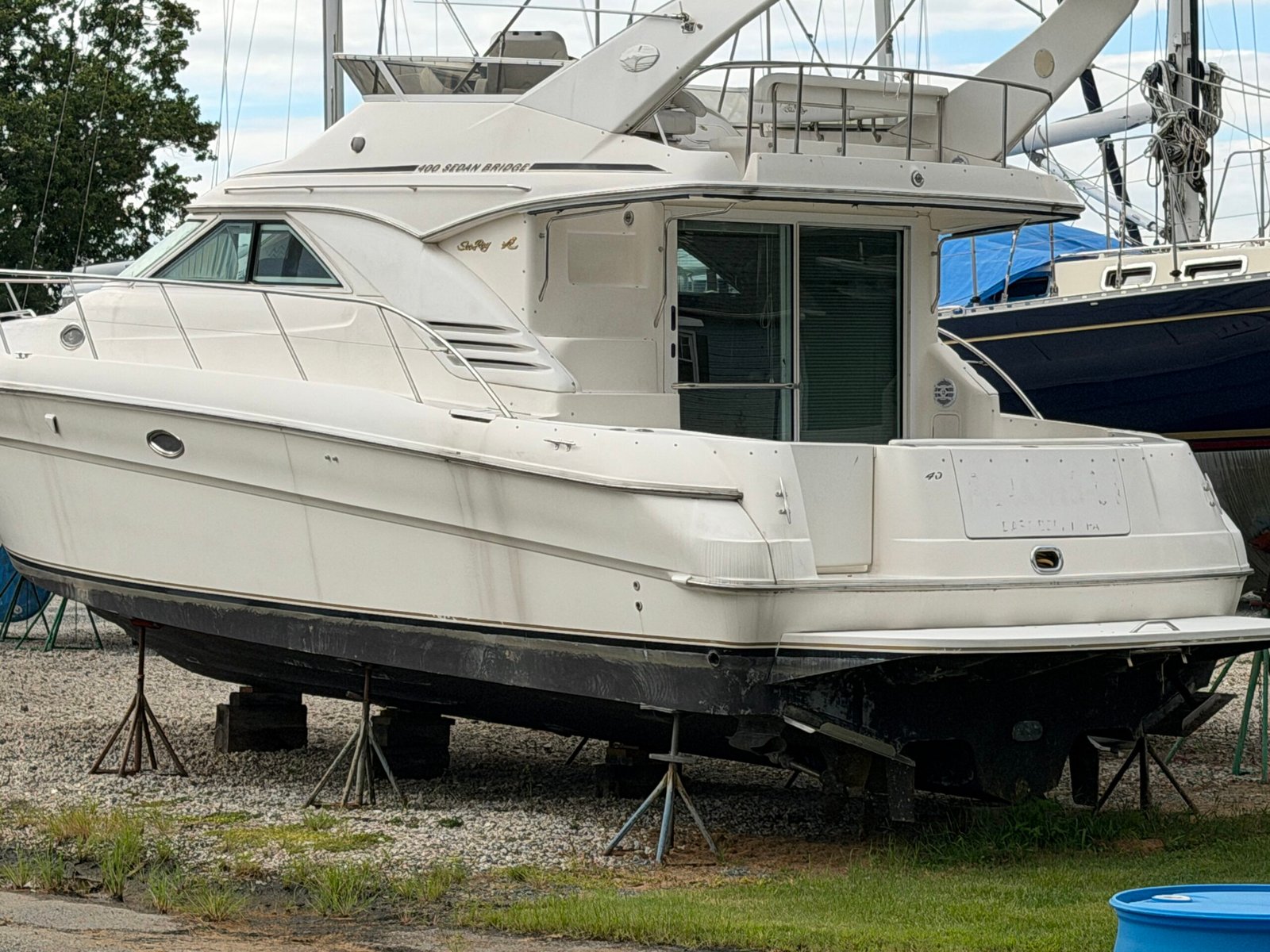
Take a wet abrasive pad and scrub a small area of the hull. If a good amount of color transfers to the pad, you are almost certainly looking at an ablative. If the surface just dulls with little or no color coming off, it is probably a hard paint.
That one test, which costs you nothing and takes two minutes, tells you whether you can recoat or whether you are looking at a barrier coat and a fresh start.
The honest summary
Match the paint to how the boat actually lives, not to how you wish it lived.
Boat stays in the water all season, cruises at moderate speed, gets left alone between trips — lean ablative. Boat runs fast, sits on a trailer, gets dunked and pulled, or has a diver on it monthly — lean hard. Boat lives in warm nutrient-rich water — do not cheap out on copper content regardless of which family you choose. Hull is aluminum — talk to the yard before you buy anything, because copper and aluminum are a galvanic problem waiting to happen.
And whatever you choose, put on the number of coats the manufacturer specifies. The most common bottom paint complaint we hear is really a complaint about somebody stretching a gallon.
This article is general guidance, not a substitute for manufacturer instructions or your yard’s expertise. Antifouling products carry specific application, compatibility and disposal requirements, and copper regulations vary by state and by basin. Follow the product data sheet and check local rules before you start.
See you on the water.