
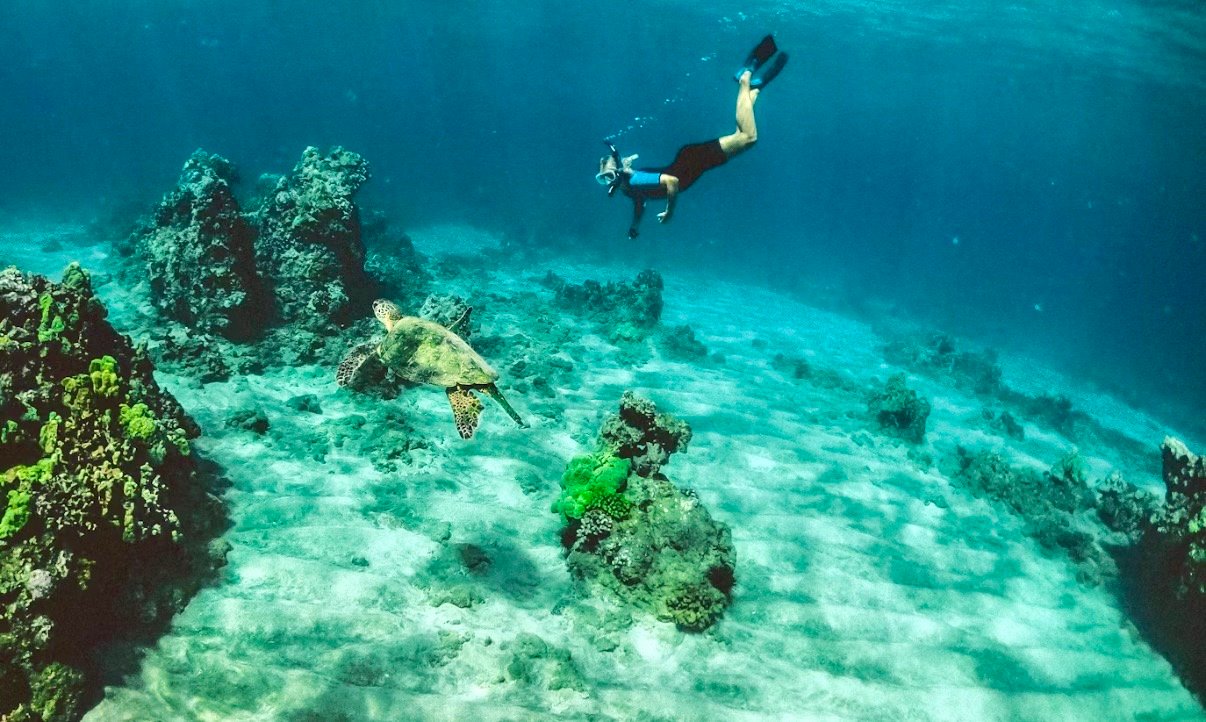
You are on the way up. You have your fish. The surface is right there.
That is where it happens.
Shallow water blackout is the leading cause of freediving death, and it almost always occurs within the last fifteen feet of the ascent or right at the surface. The diver does not choose it and does not feel it coming. The body simply runs out of oxygen and the lights go out.
The window from blackout to brain damage is roughly two to four minutes. Whether a diver lives or dies comes down to whether somebody was watching.
Why it does not feel like anything
Here is the part that kills people, and it is worth understanding properly.
The urge to breathe is not driven by low oxygen. It is driven by rising carbon dioxide. That is the whole trap.
Hyperventilating before a dive — the deep, fast breathing that feels like loading up on air — does not add oxygen. It flushes out CO2. And without CO2 rising, the alarm that tells you to surface never goes off. You feel fine right up until you are not.
Add adrenaline, excitement, or the focus of tracking a fish, and the signal gets quieter still. Feeling okay is not a safety strategy. It is the symptom.
One up, one down
This is the cornerstone and there is no substitute for it.
When one diver is on the bottom, the other is on the surface, watching. Not fifty yards away working his own line. Watching, and close enough to reach.
Watch the entire ascent — that is where it happens. Look for a diver who stops kicking, goes limp, whose head is not turned toward the surface, or who releases air from the mouth on the way up. If your buddy does not surface inside his expected window, go.
And do not walk away when he breaks the surface. Blackout happens after surfacing more often than most divers realize. Stay with him through his recovery breaths until he gives you the all clear. Divers Alert Network and most agencies put that window at around thirty seconds minimum.
The four Rs
DAN teaches blackout rescue in four steps, and every buddy should know them cold:
Recognize. The hardest part. You learn what your buddy’s normal looks like by diving with him often enough to know when it changes.
Retrieve. Get him up fast and clean. Protect the airway on the way — water in the airway makes everything after this harder and cuts his odds.
Revive. Most agencies consider tap-blow-talk the most effective way to bring an unconscious freediver back.
Recover. If a diver loses motor control or blacks out, he stays out of the water for at least 24 hours. No exceptions and no negotiating on the boat.
The rules that keep you out of it entirely
Never dive alone. Not for a quick one. Not in fifteen feet.
Do not hyperventilate. Slow, calm, natural breathing. Let the CO2 do its job.
Respect the surface interval. A common guide: recover on the surface for two to three times your dive time. Forty seconds down means a hundred to a hundred and twenty seconds up before you go again.
Lose the snorkel on the descent. If you black out with a snorkel in your mouth, it is a direct pipe for water into your lungs. Without it, the throat closes on its own and buys your buddy a window.
Get trained. A two-day freediving course covers weighting, technique, rescue and recovery. DAN’s own read on fatal incidents is blunt: the divers are usually overexerted, overweighted and undersupervised.
One more thing
Shallow water blackout is not random and it is not the ocean’s fault. It happens when somebody pushes past a comfortable limit — depth, bottom time, repetition, speed of ascent, incomplete recovery — and it is far more common in cultures chasing personal bests than in relaxed recreational diving.
Stay inside your range, recover fully, and dive with somebody who is actually watching.
No fish is worth it. Not one.
See you on the water.